FlavoTone: Electronic Smell Sensor

With FlavoTone, subjective smell becomes objective data. Developed as an advanced electronic smell sensor, FlavoTone complements the human sense of smell across various settings, enabling precise odor detection, differentiation, and digitalization. By identifying irregularities in scent, it significantly improves the precision of quality control, visualizes subtle differences between samples, and continuously tracks odor changes over time.

FlavoTone Features & Details

FlavoTone functions as a high-precision electronic nose sensor built upon a QCM (Quartz Crystal Microbalance) transducer platform. Equipped with functional receptor membranes designed to mimic aspects of the human nose, the sensor captures chemical substances contained within odors.

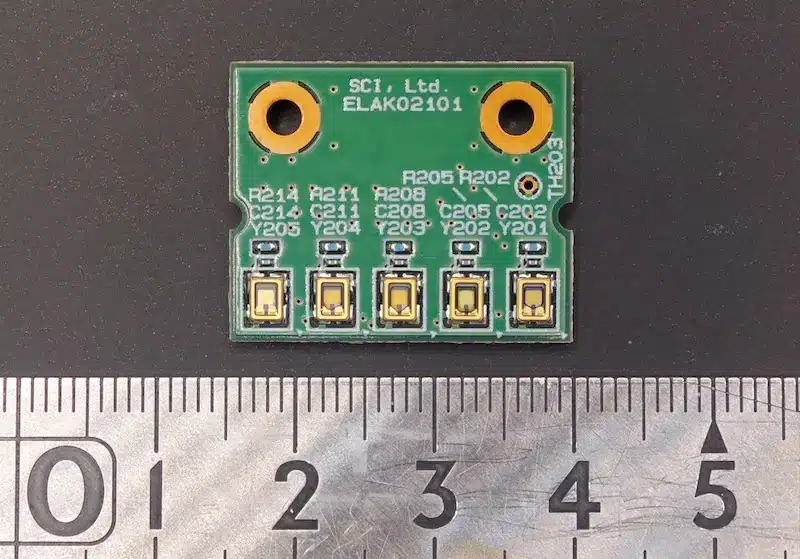
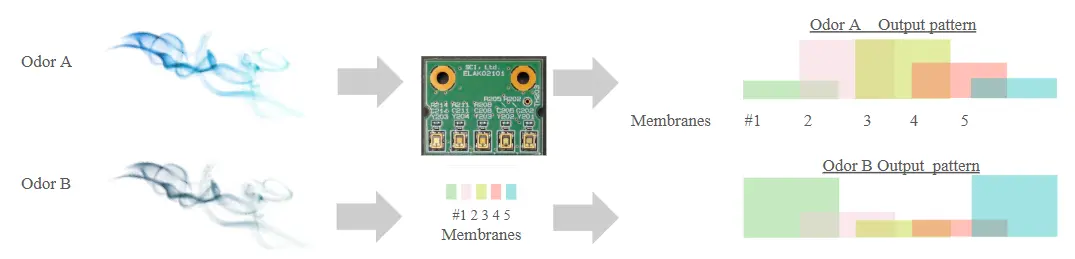
Each QCM gas sensor chip features an array of five odor-adsorbing membranes. Each membrane possesses distinct chemical affinities and physical adsorption and desorption characteristics. Some membranes respond more readily to acidic or basic substances, while others exhibit higher sensitivity to hydrophobic compounds.

Digital Pattern Conversion

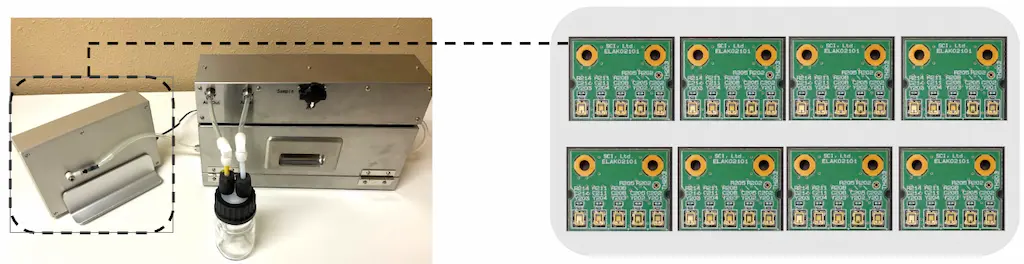
By combining membranes with varied adsorption properties (up to 40 distinct membrane types in system configurations like this photo), complex odors are converted into unique digital response patterns.

Real-Time Visualization

Frequency shifts across the sensor array are captured as numerical data and converted into visual odor profiles for instantaneous comparison, interpretation, and analysis.

Compact Integration

Designed as a compact, embedded module (Type-Q), allowing seamless device integration into industrial equipment, robotics, smart appliances, and standalone digital olfaction hardware.

Patent Information

  • Title: Odor detection system, odor identification device, and odor identification method
  • Publication: US 2019/0383772 A1
  • Assignee: Sanyo Chemical Industries Ltd / Aroma Bit Inc
  • Summary: ODOR DETECTION SYSTEM, ODOR IDENTIFICATION DEVICE, AND ODOR IDENTIFICATION METHOD

Types of Detectable Smells and Gasses by FlavoTone

FlavoTone is a highly specialized electronic odor sensor, aroma sensor, and VOC sensor designed to detect and differentiate a wide spectrum of chemical compounds and complex odor signatures. Its receptor membranes offer targeted responsiveness to:

Acid and Base Compounds

High sensitivity to basic substances, functioning effectively as an ammonia sensor and Hydrogen Chloride sensor.

Alcohols and Volatile Organic Compounds (VOCs)

Performs reliably as an alcohol sensor, Ethanol sensor, and general VOC sensor for identifying and profiling volatile emissions.

Fermentation Markers

Highly effective as a fermentation sensor, tracking shifts in alcohol-to-ester ratios and organic byproducts.

Aromatics

Excellent detection capability for aromatic compounds, including toluene and xylene.

Esters and Aldehydes

Functions as an Aldehyde sensor and ester detector capable of capturing delicate floral, fruity, or synthetic aroma notes.

Hydrocarbons

Effective across various hydrocarbon-based gaseous compounds.

FlavoTone Discrete QCM Gas Sensing

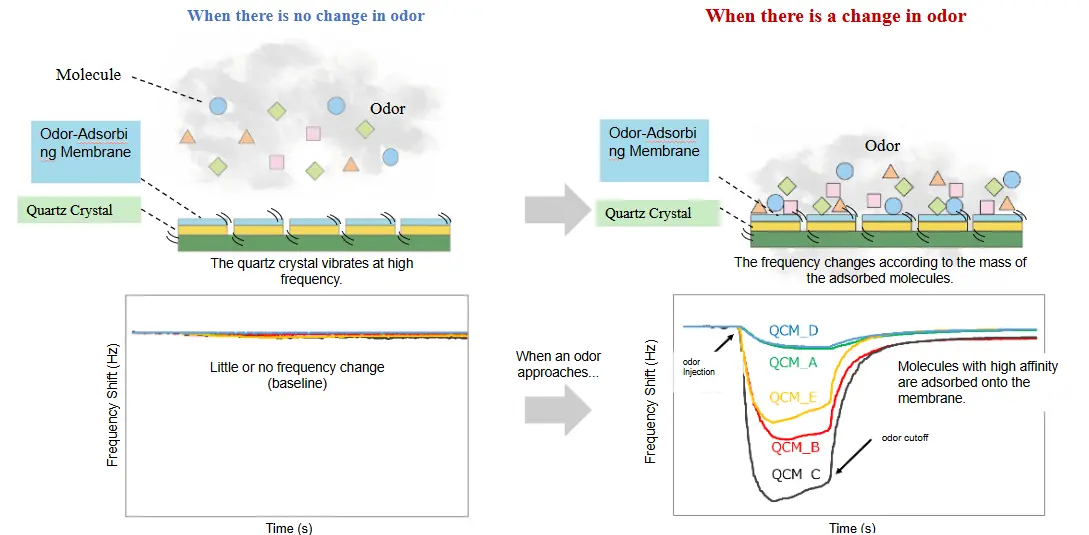
Discrete QCM (Quartz Crystal Microbalance) sensing operates as a mass-sensitive detection system.

  1. Baseline State: When no odor is present, the quartz crystal vibrates at a stable, high frequency.
  2. Adsorption Phase: As an odor approaches, target molecules with high chemical affinity are adsorbed onto the specialized receptor membranes.
  3. Frequency Shift: As the mass of the odor-adsorbing membrane increases due to captured molecules, the resonance frequency of the quartz crystal decreases. This shift in frequency (Hz) is directly captured as numerical data.
  4. Desorption Phase: When the odor source is removed or cut off, molecules desorb from the membrane, allowing the crystal frequency to return toward its baseline.

By evaluating the simultaneous frequency responses across multiple discrete QCM elements, the system generates a distinct multi-dimensional fingerprint for each sampled scent.

What Are Some Applications for FlavoTone as an Electronic Nose?

FlavoTone provides an objective digital platform for odor measurement across a wide range of industries. The following are examples of applications where its odor sensing and profiling capabilities can be utilized:

  • Quality Control & Manufacturing: Identifying subtle differences in odor to support batch-to-batch consistency checks and early detection of product abnormalities.
  • Food, Beverage, Flavor & Fragrance Analysis: Digitizing odor for aroma profiling, sensory evaluation, and process monitoring, including tracking aroma changes during brewing and fermentation processes such as sake production.
  • Environmental & Spatial Monitoring: Monitoring airborne odors and emissions, evaluating odor-control measures, and providing odor data for air purification systems.
  • Hygiene & Wellness: Monitoring odor-related changes associated with cleanliness and sanitation in public, commercial, and personal environments.
  • Predictive Maintenance & Fire Safety: Detecting characteristic odor changes, such as burnt odors, that can be evaluated as indicators of equipment abnormalities, overheating, or other developing conditions.
  • AI & Robotics: Collecting olfactory data for AI model development, building odor databases, and integrating digital olfaction capabilities into robots, drones, and other intelligent systems.

The applications listed above represent example use cases for FlavoTone. Suitability and performance for specific applications depend on the target substances, operating environment, system configuration, and testing conditions.

Patent Information for FlavoTone

  • Title: Odor detection system, odor identification device, and odor identification method
  • Publication: US 2019/0383772 A1
  • Assignee: Sanyo Chemical Industries Ltd / Aroma Bit Inc
  • Summary: ODOR DETECTION SYSTEM, ODOR IDENTIFICATION DEVICE, AND ODOR IDENTIFICATION METHOD

FlavoTone E-Nose FAQs

Because a QCM-D chip relies on physical contact between airborne odor molecules and the surface-bound receptor membranes, passive diffusion can sometimes slow down response times or lead to uneven exposure. To achieve optimal smell detection and rapid recovery times, the sensor requires active airflow. Integrating a small fan, micropump, or dedicated sampling manifold to actively move ambient air across the sensor chip ensures consistent molecule delivery, maximum sensitivity, and rapid desorption cycles.

FlavoTone is engineered specifically for design engineers, product developers, system integrators, and R&D teams who want to add intelligent smell detection capabilities to their hardware or process lines. Whether you are developing smart home appliances, automated industrial machinery, inspection devices, or robotics, FlavoTone provides the embedded sensor architecture needed to digitize scent into actionable data.

FlavoTone odor-sensing technology has been evaluated and applied in a variety of projects involving device integration, environmental monitoring, product development, and odor digitalization. Examples include:

  • Device Integration & Gas Detection: Sensor technology has been evaluated for drone-mounted hydrogen sulfide detection at ppm levels and adopted as a skin-gas detection module for a stress-sensing device under development.
  • Environmental & Spatial Monitoring: Odor identification technology has been demonstrated in a simulated vehicle environment to distinguish cigarette and coffee odors. Odor visualization technology has also been demonstrated aboard the International Space Station.
  • Food & Beverage Development: Aroma measurement and analysis have been used in food and beverage development projects, including the analysis of cheese and craft beer and support for new product development
  • Odor Digitalization & Training: Odor measurement technology has been used to support the development of training fragrances designed to reproduce normal and abnormal railway brake odors.
  • Interactive Applications: Odor sensors have also been incorporated into interactive applications, including a promotional robot that responded differently based on detected breath odors.

These examples include applications and demonstrations conducted using Sanyo Chemical’s odor-sensing technologies and systems. The specific sensor configuration and equipment used vary by project.